Heart disease is one of the most common health concerns worldwide, and angioplasty has become a highly effective treatment for restoring blood flow to the heart. One of the first questions patients ask after the procedure is, How Long Does Recovery Take After Angioplasty? While angioplasty is considered a minimally invasive procedure with a relatively short recovery period, the exact recovery time varies from person to person. Factors such as age, overall health, the severity of the blockage, and lifestyle habits all play an important role in determining how quickly a patient recovers.
Under the expert guidance of Dr. Amit Patil, patients receive comprehensive cardiac care and personalized recovery plans that help them return to their normal lives safely and confidently.
Dehydration reduces your overall blood volume, causing your blood to become thicker. To keep oxygen and nutrients flowing to your organs, your heart is forced to beat faster and pump harder. This increased strain can lead to heart palpitations, blood pressure fluctuations, and a higher risk of blood clots.
Angioplasty is a medical procedure used to open narrowed or blocked coronary arteries that supply blood to the heart muscle. During the procedure, a thin catheter with a small balloon at its tip is inserted into the affected artery. The balloon is inflated to widen the artery and improve blood flow. In many cases, a stent is also placed to help keep the artery open permanently.
The procedure is commonly recommended for patients suffering from coronary artery disease, chest pain (angina), or reduced blood flow to the heart. Because angioplasty does not require large surgical incisions, recovery is generally faster than traditional heart surgery.
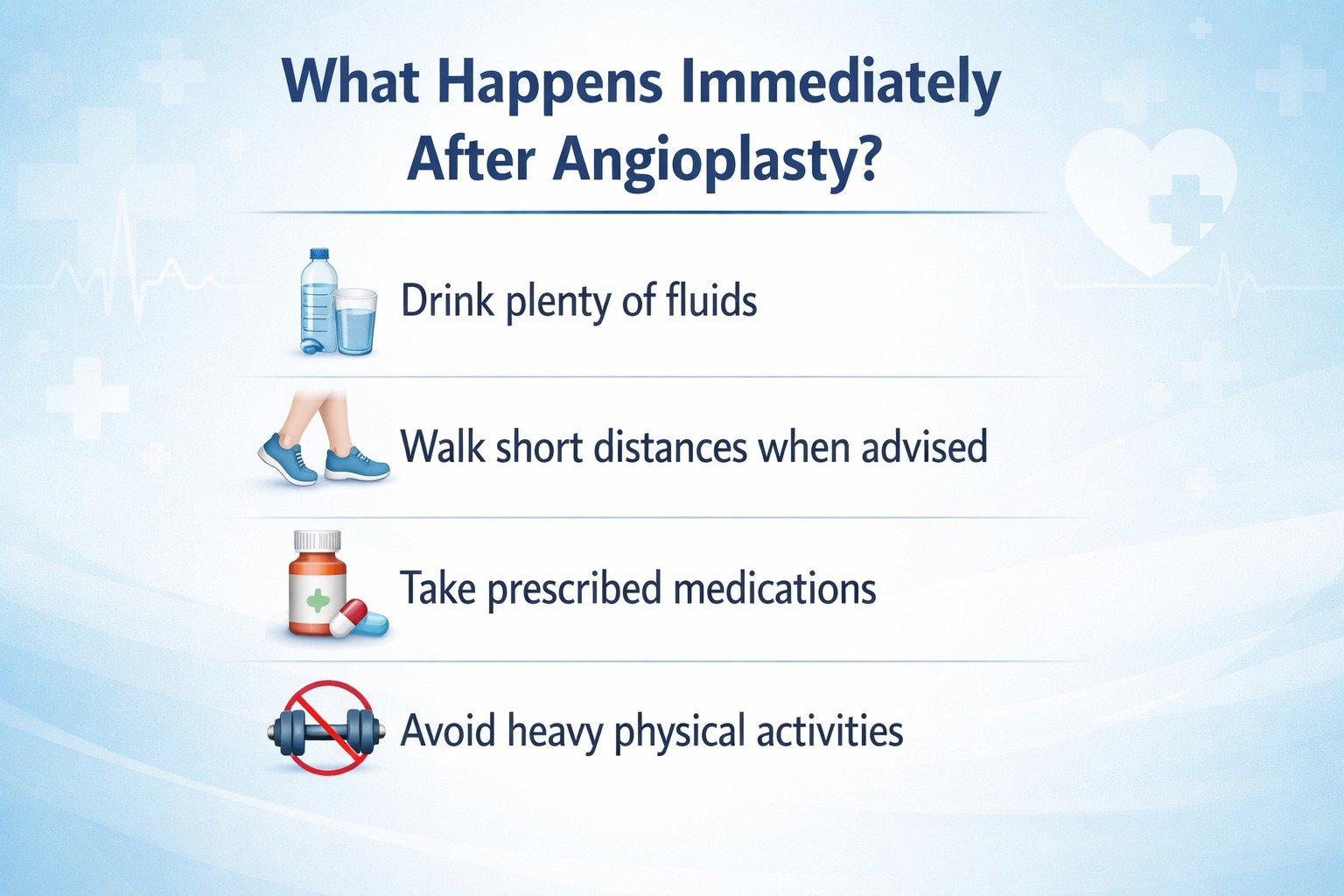
After the procedure is completed, patients are moved to a recovery area where doctors and nurses closely monitor their condition. Vital signs such as heart rate, blood pressure, and oxygen levels are checked regularly.
Most patients stay in the hospital for a few hours or overnight, depending on their overall condition and the complexity of the procedure. During this period, the healthcare team ensures there are no complications such as bleeding, infection, or irregular heart rhythms.
Patients are usually encouraged to:
The first day after angioplasty is primarily focused on rest and observation. Some patients may experience mild soreness, bruising, or discomfort at the catheter insertion site. This is normal and usually resolves within a few days.
Patients are advised to avoid strenuous activities and follow all discharge instructions carefully.
Most patients can perform light household activities within a few days. Walking is often encouraged because it promotes circulation and supports heart health.
During this period, patients should:
By this stage, many patients feel significantly better. Office workers often return to work within one to two weeks, while individuals with physically demanding jobs may require additional recovery time.
Energy levels gradually improve, and daily routines become easier to manage.
The heart continues to heal over the next several weeks. Patients who participate in cardiac rehabilitation programs often experience better outcomes and improved cardiovascular fitness.
Regular exercise, a healthy diet, and routine follow-up visits become essential parts of long-term recovery.
Every patient recovers differently. Several factors influence the healing process after angioplasty.
Younger patients typically recover more quickly because their bodies heal faster and they often have fewer underlying health conditions.
Conditions such as diabetes, kidney disease, obesity, and high blood pressure can slow recovery and require closer monitoring.
Patients with multiple arterial blockages or advanced coronary artery disease may require a longer recovery period.
Smoking, excessive alcohol consumption, poor diet, and physical inactivity can negatively affect recovery and increase the risk of future heart complications.
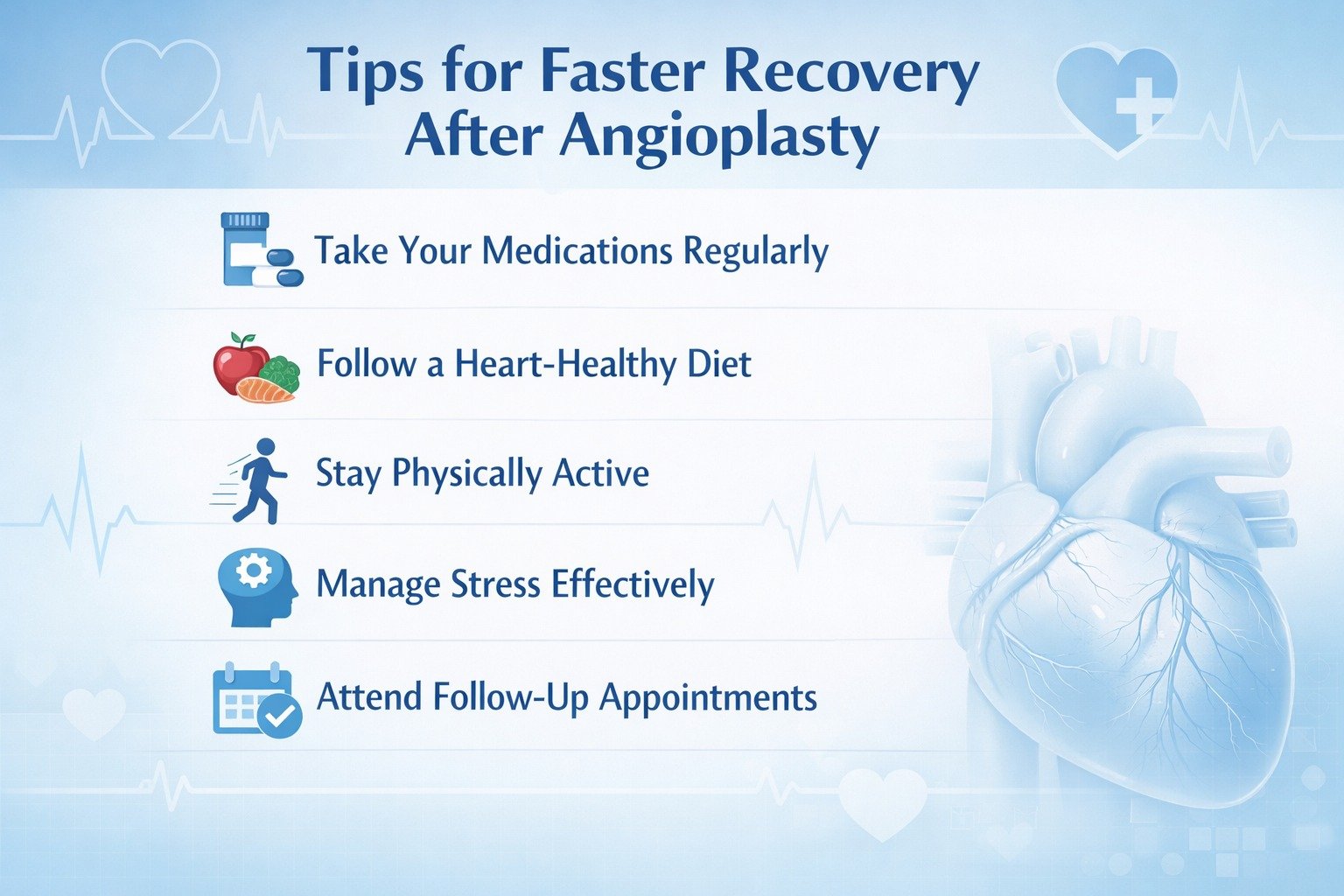
Your doctor may prescribe blood thinners, cholesterol-lowering medications, or blood pressure medications. Taking them exactly as directed is essential for preventing complications.
A balanced diet rich in fruits, vegetables, whole grains, lean proteins, and healthy fats can help improve heart health and reduce future cardiovascular risks.
Regular physical activity supports circulation and strengthens the heart. Start with gentle walking and gradually increase activity levels as advised by your cardiologist.
Stress can impact blood pressure and overall heart health. Meditation, yoga, breathing exercises, and adequate sleep can help reduce stress levels.
Routine checkups allow your doctor to monitor your progress and make any necessary adjustments to your treatment plan.
Although angioplasty is generally safe, patients should seek immediate medical attention if they experience:
Early intervention can help prevent serious complications.
Before recommending angioplasty, doctors often perform specialized imaging tests to identify blockages and assess heart function.
Many patients undergo Coronary Angiography in Mumbai which helps cardiologists visualize the coronary arteries and identify areas of narrowing or blockage.
Advanced imaging techniques such as MR Angiography in Mumbai may be recommended for evaluating blood vessels without the need for traditional catheter-based procedures.
In some situations, MRI Angiography in Mumbai provides highly detailed images that assist doctors in planning the most effective treatment strategy.
A coronary angiography test in Mumbai is often considered the gold standard for diagnosing coronary artery disease and determining the need for angioplasty.
Doctors may also recommend a ct angiography heart in Mumbai scan when they need a non-invasive assessment of the heart and surrounding blood vessels.
Patients seeking advanced imaging technology frequently search for the Best CT Angiography in Mumbai to ensure accurate diagnosis and reliable results.
Selecting an experienced cardiologist and a well-equipped healthcare facility can significantly impact treatment outcomes and recovery.
Patients looking for the Best Angiography in Mumbai often prioritize hospitals that offer advanced diagnostic equipment, experienced specialists, and comprehensive cardiac care.
Many individuals also seek treatment at the Best Hospital for Angiography in Mumbai where they can access both diagnostic and interventional cardiac services under one roof.
A trusted healthcare provider not only performs the procedure effectively but also offers ongoing support throughout the recovery journey.
Cost is an important consideration for many patients planning cardiac investigations.
The Angiography cost in Mumbai can vary depending on factors such as hospital infrastructure, technology used, and the complexity of the patient’s condition.
Patients frequently compare the Angiography test price in Mumbai before selecting a diagnostic center or hospital.
The overall cost of Angiography may also depend on whether additional tests or interventions are required as part of the treatment process.
Discussing costs with your healthcare provider beforehand can help you make informed decisions and avoid unexpected expenses.
While angioplasty effectively restores blood flow, maintaining heart health requires long-term commitment.
Smoking damages blood vessels and increases the risk of future blockages. Quitting smoking is one of the most important steps for protecting your heart.
Proper management of blood pressure and blood sugar levels significantly reduces cardiovascular risks.
Excess weight places additional strain on the heart and can contribute to several cardiovascular conditions.
Even moderate physical activity can improve heart function, circulation, and overall health.
Focus on fresh vegetables, fruits, whole grains, lean proteins, and healthy fats while limiting processed foods and sugary beverages.
Dr. Amit Patil is known for providing patient-focused cardiac care, advanced diagnostic services, and personalized treatment plans. His approach emphasizes accurate diagnosis, effective treatment, and long-term heart health management.
Patients interested in learning more about angioplasty treatment options can visit:
best hospital for angioplasty Mumbai
For directions and clinic information, visit:
Best angioplasty Hospital Mumbai
With expert guidance and modern treatment approaches, Dr. Amit Patil helps patients achieve better heart health and a smooth recovery process.
Recovery after angioplasty is generally quick, with many patients returning to their normal daily activities within a few weeks. However, successful recovery depends on following medical advice, taking prescribed medications, maintaining a healthy lifestyle, and attending regular follow-up appointments.
If you or a loved one has been advised to undergo angioplasty, consulting an experienced cardiologist such as Dr. Amit Patil can help ensure the best possible outcome. With proper care and lifestyle modifications, patients can enjoy improved heart health and a better quality of life for years to come.