High cholesterol is one of the leading causes of heart disease worldwide. Many people have high cholesterol without knowing it because it usually does not cause symptoms until serious complications develop. Understanding How High Cholesterol Leads to Heart Blockage can help you take the right steps to protect your heart and reduce the risk of heart attack or stroke.
If you have high cholesterol, chest pain, or a family history of heart disease, consulting an experienced cardiologist at an early stage can help prevent serious complications.
What Is High Cholesterol?
Cholesterol is a waxy, fat-like substance that your body needs to build healthy cells and produce hormones. Your liver naturally makes cholesterol, and you also get it from foods such as red meat, butter, cheese, fried foods, and processed snacks.
There are two main types of cholesterol:
LDL (Low-Density Lipoprotein): Known as “bad cholesterol” because it can build up inside the arteries.
HDL (High-Density Lipoprotein): Known as “good cholesterol” because it helps remove excess cholesterol from the bloodstream.
When LDL cholesterol levels become too high, it can damage your arteries and increase your risk of cardiovascular disease.
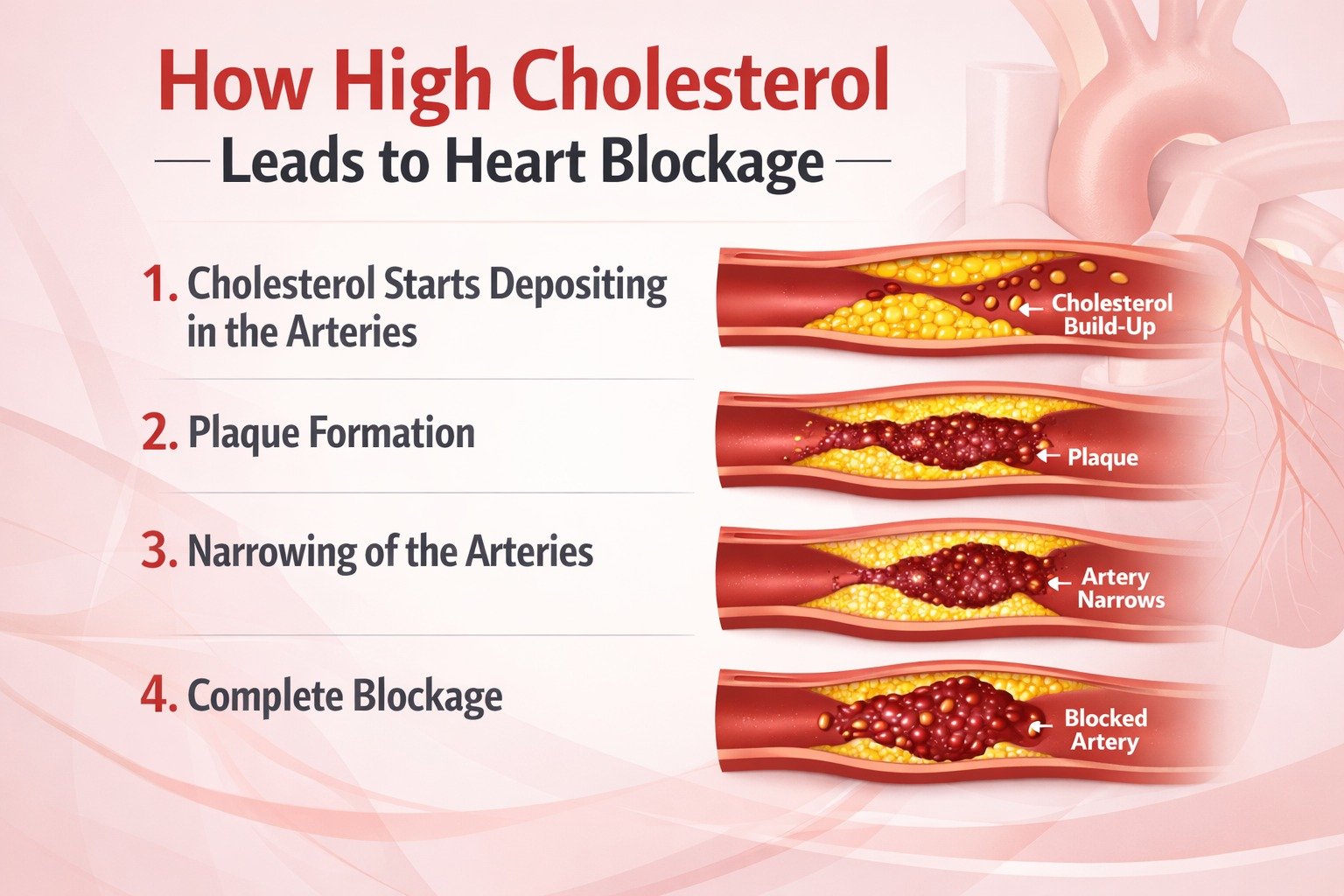
How High Cholesterol Leads to Heart Blockage
The process of heart blockage develops gradually over several years.
1. Cholesterol Starts Depositing in the Arteries
Excess LDL cholesterol enters the walls of the coronary arteries, which supply oxygen-rich blood to the heart muscle.
Tiny injuries inside the artery walls allow cholesterol to settle and accumulate.
2. Plaque Formation
Over time, cholesterol combines with calcium, inflammatory cells, and other substances to form plaques.
These plaques make the artery walls thicker and harder.
3. Narrowing of the Arteries
As plaques continue to grow, they reduce the space available for blood flow.
The heart receives less oxygen, especially during exercise or emotional stress.
4. Complete Blockage
Sometimes a plaque ruptures suddenly.
The body forms a blood clot around the rupture, which may completely block blood flow.
This can cause:
Heart attack
Severe chest pain (angina)
Permanent heart muscle damage
Sudden cardiac death
This explains How High Cholesterol Leads to Heart Blockage and why managing cholesterol early is essential.
Symptoms of Heart Blockage
High cholesterol itself usually has no symptoms.
However, heart blockage may cause:
Chest pain or discomfort
Pain spreading to the shoulder, jaw, neck, or left arm
Shortness of breath
Fatigue during physical activity
Sweating
Dizziness
Nausea
Irregular heartbeat
Some people experience a “silent heart attack” without noticeable symptoms, especially people with diabetes.
Risk Factors That Increase Cholesterol
Several lifestyle and medical factors increase cholesterol levels.
These include:
Eating fatty and fried foods
Lack of physical activity
Obesity
Smoking
Excess alcohol intake
Diabetes
High blood pressure
Family history of high cholesterol
Increasing age
Chronic stress
Managing these risk factors significantly lowers the chances of heart disease.
How Doctors Diagnose Heart Blockage
If your cardiologist suspects heart blockage, several tests may be recommended.
These include:
Lipid profile
ECG
Echocardiography
Stress test
CT Coronary Angiography
Coronary Angiography
Early diagnosis helps identify narrowing before it becomes life-threatening.
In many cases, cholesterol levels can be improved with healthy lifestyle changes and appropriate medications.
Doctors commonly recommend:
Eating more fruits and vegetables
Whole grains
Oats
Nuts
Fish rich in Omega-3 fatty acids
Regular exercise
Weight loss
Smoking cessation
Controlling diabetes and blood pressure
If lifestyle changes are not enough, cholesterol-lowering medicines such as statins may be prescribed.
When Heart Blockage Needs Advanced Treatment
Sometimes cholesterol causes severe blockage that cannot be managed with medicines alone.
Depending on the severity, treatment options include:
Angioplasty
Coronary artery bypass surgery (CABG)
Lifestyle modification
Long-term medications
In some patients, heart rhythm problems can also develop. In such cases, Heart Pacemaker in Mumbai may be recommended after proper evaluation by a cardiologist.
When Is a Pacemaker Needed?
A pacemaker is different from angioplasty or bypass surgery.
It is used when the heart beats too slowly or irregularly.
Understanding How High Cholesterol Leads to Heart Blockage is the first step toward protecting your heart. High cholesterol silently damages the arteries over time, increasing the risk of heart attack and other cardiovascular complications. Fortunately, regular health check-ups, healthy lifestyle changes, and timely medical treatment can significantly reduce these risks.
If you have high cholesterol, diabetes, high blood pressure, or a family history of heart disease, do not ignore regular heart evaluations. Early diagnosis and expert care from Dr. Amit Patil can help you maintain a healthy heart and prevent future complications.