Why Does My Heart Beat Fast Even When I'm Resting?
A fast heartbeat while sitting, lying down, or relaxing can feel alarming. If you’ve ever wondered, Why Does My Heart Beat Fast Even When I’m Resting? you’re not alone. A resting heart rate that suddenly increases without physical activity may be caused by stress, anxiety, dehydration, certain medical conditions, or heart rhythm disorders. While occasional episodes may not be serious, persistent or frequent episodes should always be evaluated by a qualified cardiologist.
If you notice that your heart races regularly, especially along with dizziness, chest discomfort, shortness of breath, or fainting, it is important to seek medical advice promptly.
What Is Considered a Normal Resting Heart Rate?
For most healthy adults, a normal resting heart rate ranges between 60 and 100 beats per minute. Athletes and physically active individuals may naturally have lower heart rates because their hearts pump blood more efficiently.
A consistently high resting heart rate is known as tachycardia, which may require further medical evaluation depending on the cause.
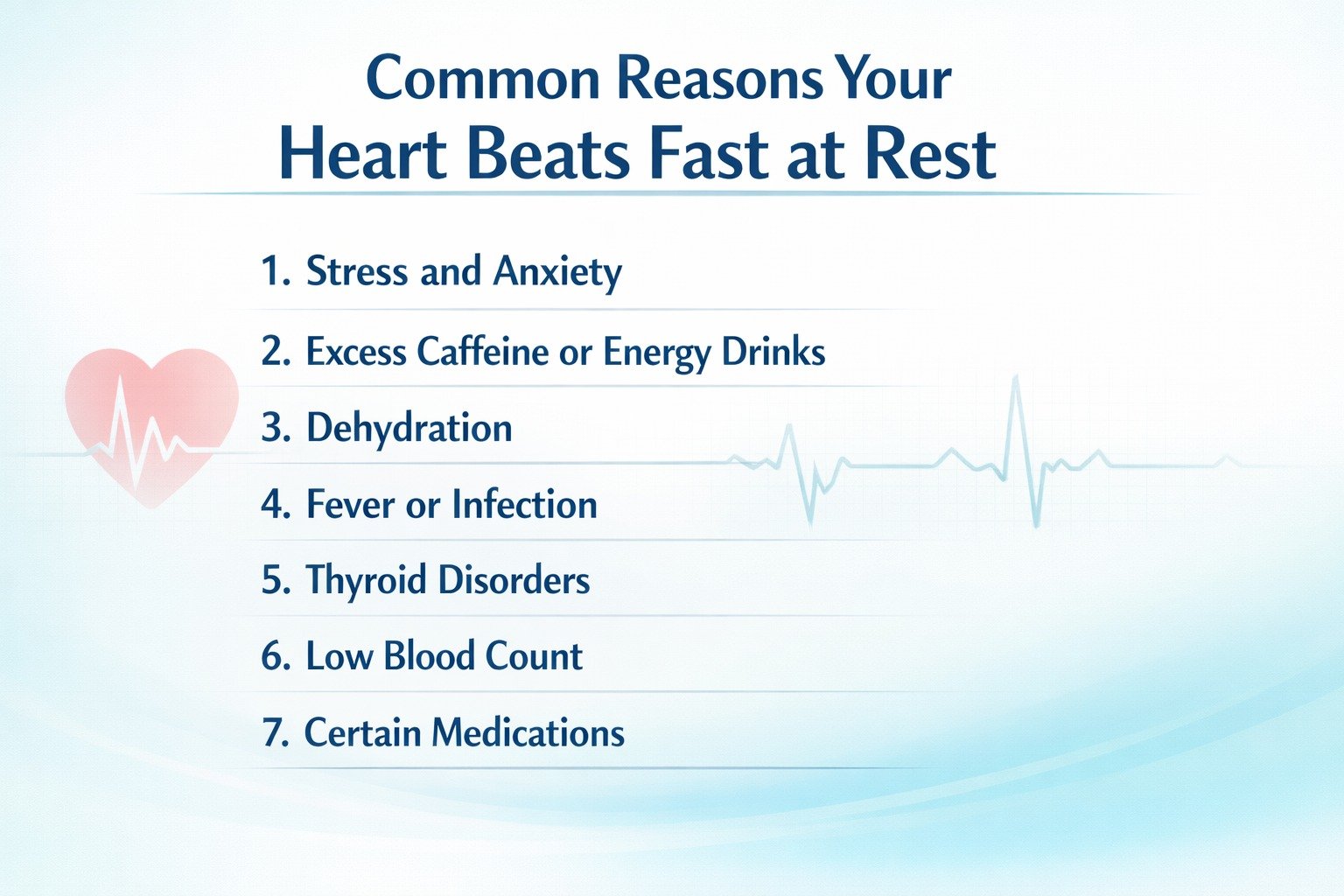
Common Reasons Your Heart Beats Fast at Rest
Several factors can temporarily or permanently increase your resting heart rate.
1. Stress and Anxiety
Emotional stress causes your body to release adrenaline, making your heart beat faster. Panic attacks can sometimes feel similar to a heart attack.
2. Excess Caffeine or Energy Drinks
Coffee, tea, energy drinks, and certain supplements stimulate the nervous system, temporarily increasing heart rate.
3. Dehydration
When your body lacks fluids, your heart works harder to circulate blood, resulting in a faster pulse.
4. Fever or Infection
Your heart rate naturally rises during illness because your body needs more oxygen to fight infection.
5. Thyroid Disorders
An overactive thyroid gland (hyperthyroidism) speeds up metabolism and often causes persistent rapid heartbeat.
6. Low Blood Count (Anemia)
When oxygen-carrying capacity decreases, the heart compensates by pumping faster.
7. Certain Medications
Asthma inhalers, thyroid medication, decongestants, and some weight-loss medicines may increase heart rate.
8. Heart Rhythm Disorders
Conditions like atrial fibrillation, supraventricular tachycardia (SVT), or other arrhythmias may cause episodes of rapid heartbeat even while resting.
When Should You Be Concerned?
Occasional increases in heart rate after stress or caffeine usually settle on their own. However, medical attention is recommended if you experience:
Heart rate consistently above 100 bpm while resting
Chest pain or pressure
Shortness of breath
Fainting or dizziness
Irregular heartbeat
Persistent palpitations lasting several minutes
Family history of serious heart disease
Early diagnosis helps prevent complications and allows timely treatment.
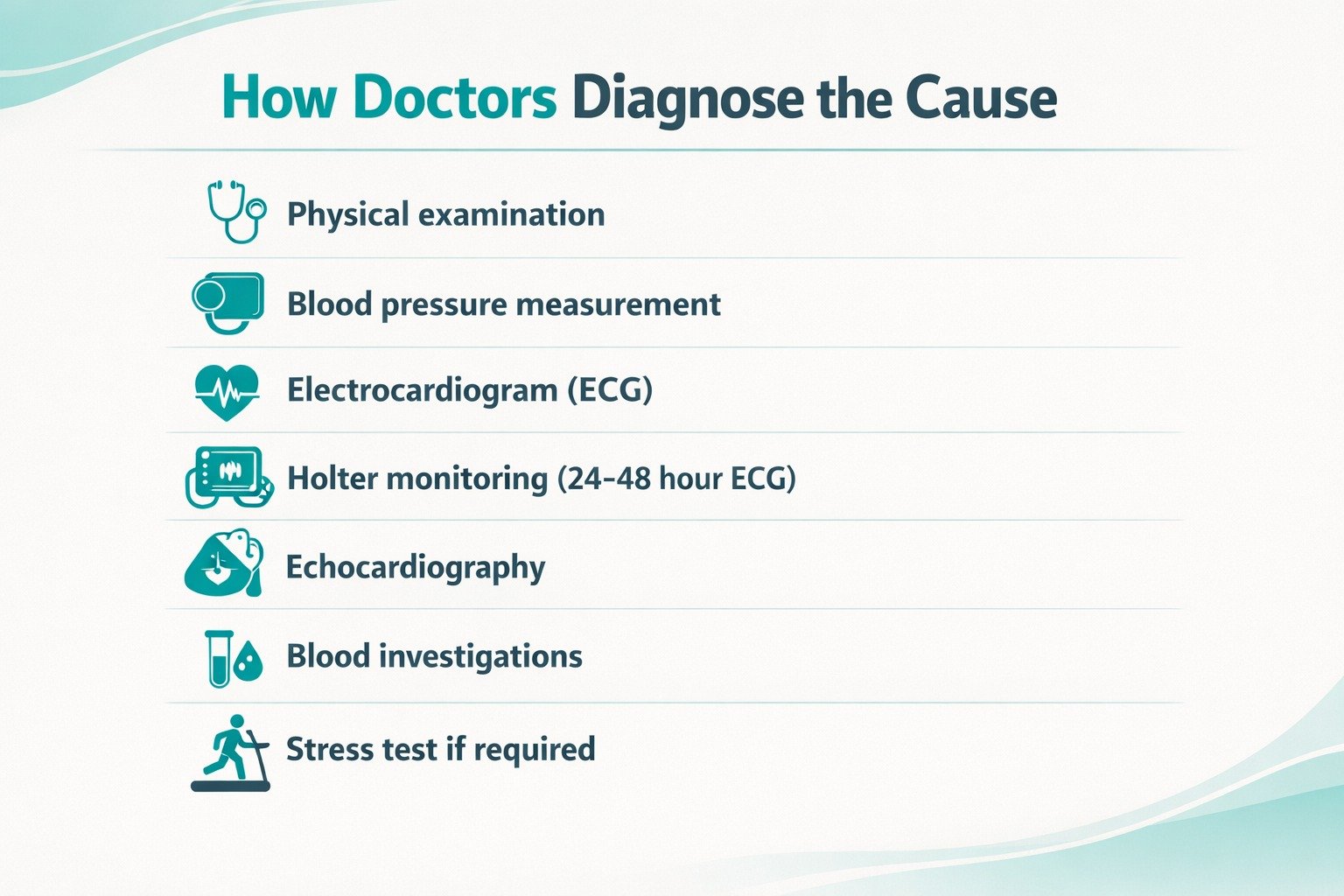
How Doctors Diagnose the Cause
A cardiologist may recommend:
Physical examination
Blood pressure measurement
Electrocardiogram (ECG)
Holter monitoring (24-48 hour ECG)
Echocardiography
Blood investigations
Stress test if required
These tests help determine whether the fast heartbeat is temporary or related to an underlying cardiac condition.
Treatment Depends on the Underlying Cause
Treatment varies according to diagnosis.
Lifestyle Changes
Drink adequate water.
Limit caffeine and alcohol.
Reduce stress through meditation or breathing exercises.
Get sufficient sleep.
Exercise regularly after medical advice.
Maintain a healthy weight.
Medications
Doctors may prescribe medicines to control heart rhythm or treat underlying conditions such as thyroid disorders or high blood pressure.
Advanced Cardiac Procedures
Some patients with significant rhythm disorders may require specialized treatments such as catheter ablation or implanted cardiac devices.
For patients with dangerously slow or abnormal heart rhythms, Heart Pacemaker in Mumbaiservices provide advanced treatment options. Modern pacemakers help regulate heart rhythm safely and improve quality of life.
When Is a Pacemaker Needed?
A pacemaker is usually recommended when the heart beats too slowly or electrical signals within the heart become abnormal. Symptoms may include:
Frequent fainting
Severe fatigue
Slow heartbeat
Dizziness
Heart block
Depending on the patient’s condition, a cardiologist may recommend Heart pacemaker surgery in Mumbai after detailed evaluation. The procedure is commonly performed using minimally invasive techniques with a short hospital stay.
Patients often ask about pacemaker cost in Mumbai before treatment. The overall expense depends on the type of device, hospital facilities, and individual medical requirements.
What Happens During Pacemaker Implantation?
The procedure is generally performed under local anesthesia with mild sedation.
During pacemaker implantation in Mumbai thin wires (leads) are guided into the heart through a vein and connected to a small pulse generator placed beneath the skin near the collarbone.
The complete pacemaker procedure in Mumbai usually takes one to two hours, and many patients return home within a day, depending on their recovery.
Experience plays a vital role in successful treatment. If your doctor recommends device therapy, selecting the Best Doctor for pacemaker in Mumbai ensures accurate diagnosis, proper device selection, and comprehensive follow-up care.
Patients should also look for a center recognized as the best hospital for pacemaker in Mumbai where modern cardiac technology, experienced specialists, and emergency care are available under one roof.
Tips to Maintain a Healthy Heart Rate
Healthy habits significantly reduce the risk of heart rhythm problems.
Exercise regularly.
Eat a heart-friendly diet.
Avoid tobacco.
Control blood pressure and diabetes.
Maintain healthy cholesterol levels.
Sleep for 7-8 hours daily.
Practice stress management.
Attend regular cardiac check-ups.
Small lifestyle improvements can make a significant difference in long-term cardiovascular health.
Conclusion
Experiencing a racing heartbeat while resting should never be ignored, especially if it occurs frequently or is accompanied by other symptoms. Although many cases are related to stress, dehydration, or lifestyle factors, some may indicate an underlying heart rhythm disorder requiring medical attention.
Early evaluation by an experienced cardiologist helps identify the exact cause and ensures timely treatment. Whether lifestyle modifications, medication, or advanced therapies are required, modern cardiology offers effective solutions for restoring normal heart rhythm and improving overall heart health.