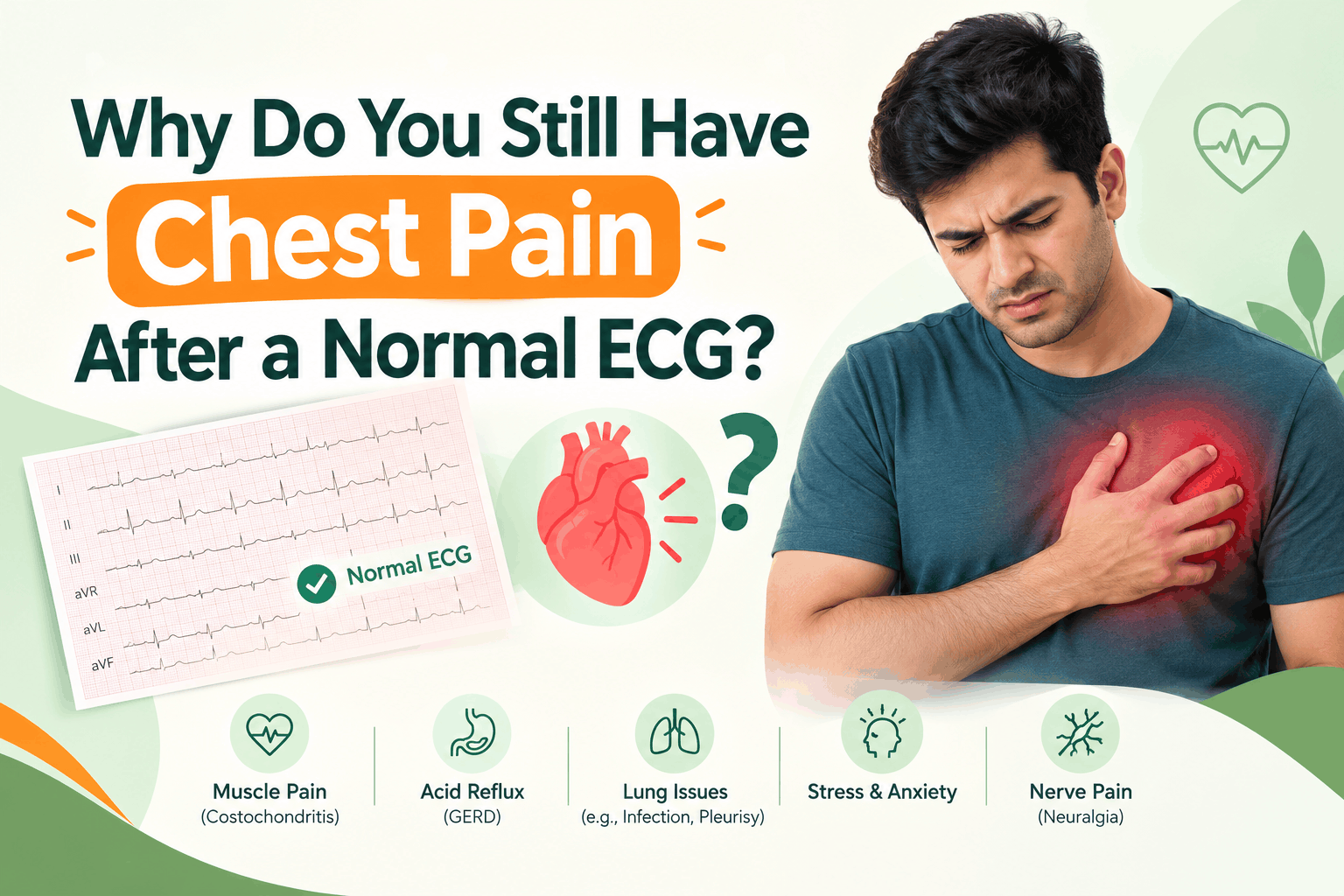
Chest pain can be worrying, especially when it continues even after a normal ECG report. Many people believe that a normal ECG means their heart is completely healthy. However, some heart conditions may not appear during this test. Understanding the causes of chest pain after a normal ECG can help you know when to seek medical attention. Consulting the Best Cardiologist in Mumbai can help you understand your symptoms and identify the need for further investigations.
An electrocardiogram (ECG) records the electrical activity of your heart. It helps doctors identify certain heart rhythm problems and electrical changes. However, a normal ECG cannot rule out every heart condition.
If chest pain continues, your doctor may recommend additional tests based on your symptoms, medical history, and risk factors. A qualified Heart Specialist in Mumbai can assess whether your symptoms require further cardiac evaluation.
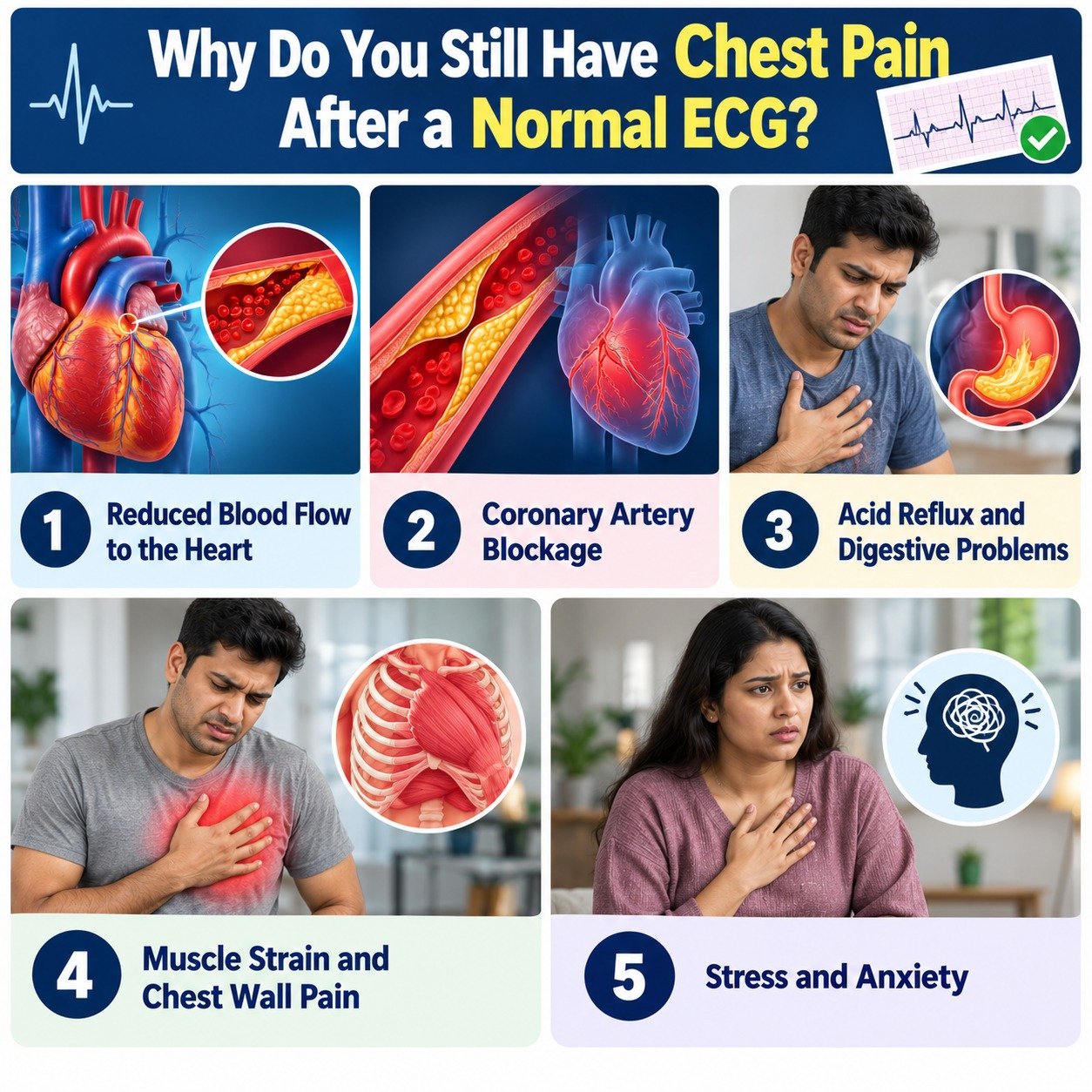
The heart needs a continuous supply of oxygen-rich blood to function properly. When the coronary arteries become narrow, the heart muscle may not receive enough oxygen, especially during physical activity. This can cause angina, which may feel like pressure, tightness, or heaviness in the chest.
A normal ECG between episodes does not always exclude reduced blood flow to the heart. If your symptoms suggest coronary artery disease, your doctor may recommend further investigations.
A blockage in the coronary arteries can reduce blood supply to the heart. Symptoms may include chest discomfort, breathlessness, sweating, and unusual tiredness. In some cases, a person may have coronary artery disease even when the initial ECG appears normal.
Your doctor may recommend coronary angiography in Mumbai when this procedure is clinically appropriate. It helps examine the coronary arteries and identify significant narrowing.
For selected patients, an Interventional Cardiologist in Mumbai may recommend coronary angioplasty to improve blood flow when a significant blockage requires treatment.
Not every episode of chest pain comes from the heart. Acid reflux occurs when stomach acid moves back into the food pipe, causing a burning sensation behind the breastbone. Symptoms may become worse after eating or lying down.
However, heart-related chest pain can feel similar to acidity. Do not assume that chest discomfort is caused by digestion, especially if it is new, persistent, or associated with breathlessness.
Muscle strain, inflammation around the ribs, and chest injuries can also cause chest pain. The discomfort may increase when you move your upper body, cough, or press the affected area.
Although these symptoms may suggest a muscular problem, they cannot completely rule out a heart condition. A Cardiac Specialist in Mumbai can help evaluate symptoms when a cardiac cause is suspected.
Stress and anxiety can cause chest tightness, a racing heartbeat, sweating, and difficulty breathing. These symptoms may occur during periods of emotional stress or panic attacks.
However, chest pain should not automatically be attributed to anxiety. Medical assessment is important to determine whether the symptoms could be related to a heart condition.
Chest pain can sometimes indicate a heart attack or another serious medical condition. Seek emergency medical care immediately if you experience:
Do not wait for another ECG or a routine appointment if these warning signs occur. A normal earlier ECG does not rule out a heart attack.
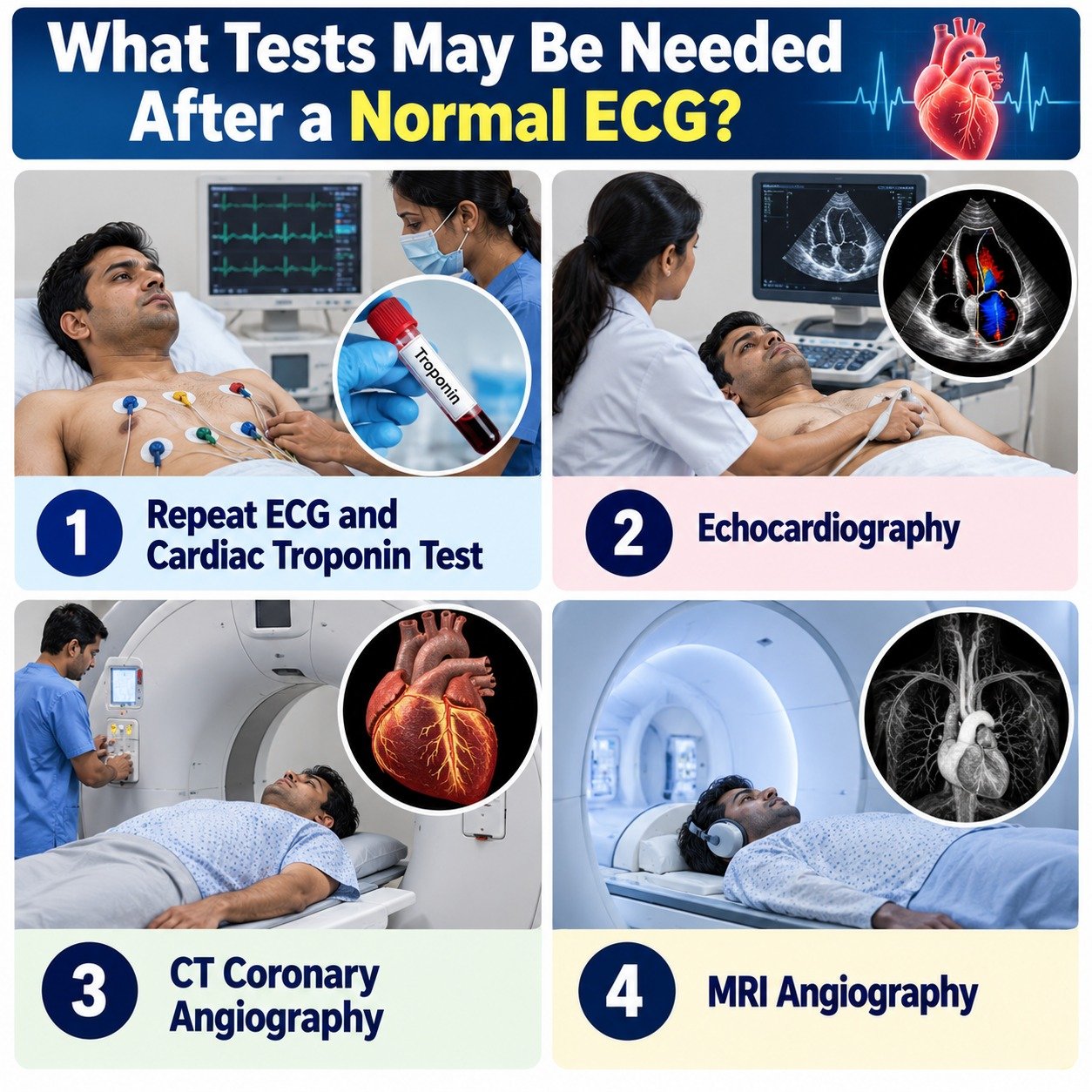
Your doctor may recommend additional tests depending on your symptoms and initial examination.
A repeat ECG may identify changes that were not present during the first test. A cardiac troponin blood test helps detect heart muscle damage and is particularly important when a heart attack is suspected.
An echocardiogram uses ultrasound to assess the heart’s structure, pumping function, and movement of its walls.
CT coronary angiography uses a CT scanner and contrast material to examine the coronary arteries. Your doctor may recommend it when further evaluation of coronary artery disease is needed.
In selected cases, magnetic resonance angiography may help evaluate particular blood vessels or cardiovascular conditions. You can learn more about the available MRI angiography services in Mumbai. The most suitable investigation depends on the suspected condition; MRI angiography is not the standard first-line test for every suspected coronary blockage.
Certain factors increase the risk of coronary artery disease, including:
People with these risk factors should take recurring chest pain seriously, even if their first ECG is normal.
If chest pain continues, returns frequently, or occurs during physical activity, seek prompt medical evaluation. Consulting the Best Heart Doctor in Mumbai can help you understand the possible cause of your symptoms and determine whether further cardiac investigations are needed. A cardiologist will assess your medical history, symptoms, and test results before recommending an appropriate treatment plan.
Dr Amit Patil can evaluate your symptoms and guide you regarding further cardiac tests and treatment options. Depending on the diagnosis, treatment may include medicines, lifestyle changes, or a medical procedure.
In some cases, patients with complex coronary artery disease may require surgical evaluation. Consulting the Best Cardiac Surgeon in Mumbai or the Best Heart Surgeon in Mumbai may be appropriate when surgery is medically necessary. A Top Cardiac Surgeon in Mumbai can assess suitable cases and recommend the most appropriate surgical approach. However, not every patient with chest pain or coronary artery blockage requires surgery; treatment depends on the severity of the condition, investigation findings, and overall heart health.
Healthy daily habits can help lower your risk of cardiovascular disease.
If you have unexplained chest pain, avoid strenuous exercise until you have received appropriate medical advice.
Chest pain after a normal ECG should not be ignored. The cause may be related to acidity, muscle strain, or anxiety, but it can also indicate a heart condition that requires further investigation. A normal ECG is only one part of the diagnostic process.
If you continue to experience chest discomfort, consult Dr Amit Patil for an appropriate assessment and guidance on further testing. Early evaluation can help identify the cause and support timely treatment. If you have symptoms suggesting a heart attack, seek emergency